
Weatherdock Easy Rescue-Automatic Atex
$1,080.00 Original price was: $1,080.00.$1,050.00Current price is: $1,050.00.
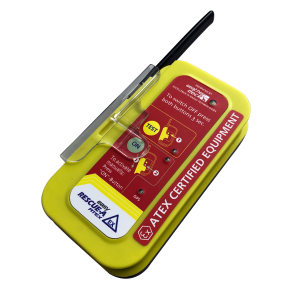
AIS + DSC with ATEX rating
An ATEX rating indicates that a product has been tested and certified to meet specific safety requirements for use in hazardous environments where explosions could occur due to flammable gases, vapors, mists, or dusts.
FUNCTION
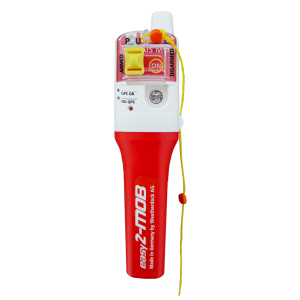
The easyRESCUE-PRO rescue transmitter triggers an alarm in the AIS system as well as in the DSC GMDSS emergency call system. For your personal security, you can take advantage of both technologies in one device. Because in an emergency every second counts!
The easyRESCUE-PRO (BT) rescue transmitter has an integrated Bluetooth-LE module. This allows easily and fast the programming of the up to 8 different MMSI numbers in the rescue transmitter. Get the best of both to alert vessels about situation of distress If a „MAN OVER BOARD“ situation happens, you need to keep the victim in sight. It is essential for his survival. The easyRESCUE-PRO has been developed based on the well-known and approved AIS S.A.R.T. device easyRESCUE. In addition to the AIS locating functionality, the easyRESCUE-PRO has got another built-in VHF alert: DSC distress call (MOB) By means of DSC distress call, other vessels having DSC controllers aboard are able to provide support as a potential emergency responder. It‘s a lightweight personal locating device which is fixed to clothing or lifejackets and which can be mounted onto a pole for use on life rafts.
Upon activation, the easyRESCUE-PRO device starts transmitting position reports via AIS, providing the current GPS position along with COG, SOG and its individual unit ID. The victim‘s position is updated every minute and transmitted 8 times per minute for at least 96 hours, depending on the DSC closed loop distress acknowledgment. Therefore the crew of the ship will know exactly the victim‘s position, as well as every other ship with an AIS receiver or DSC controller within range. When in emergency, AIS messages are transmitted. It triggers a safety related message on every AIS chart plotter with a worldwide standardized symbol. By means of DSC distress call (MOB), this signal can be received by the GMDSS (Global Maritime Distress and Safety Service), which is installed on numerous vessels and shore stations. The MRCC (Maritime Rescue Coordination Center) is part of the GMDSS (DSC) network. The easyRESCUE-PRO starts sending “closed loop” DSC distress alerts when activated. This “closed loop” message is addressed to the own ship of the victim. Up to this time no global alarm is initiated. The crew on the own ship can decide to rescue the victim on this own and send out a DSC acknowledgment to the easyRESCUE-PRO, which stops sending DSC messages. In addition, the easyRESCUE-PRO offers the possibility of programming up to eight mother ships ID numbers (MMSI) into the device to those users, who often need to change a vessel like pilots, SAR crew members, etc. Any vessel within the “closed loop” group (up to eight vessels) can acknowledge these distress telegrams, which lead to a termination of the DSC distress calls send out by easyRESCUE-PRO. If the “closed loop” distress telegrams are not acknowledged, the easyRESCUE-PRO starts sending „open loop DSC distress calls“ (MOB) to all ships. Now the shore station or other commercial ship stations nearby can acknowledge this message and the easyRESCUE-PRO will also cease transmitting DSC. The global rescue operation will go on.
What is necessary to run the easyRESCUE-PRO?
The easyRESCUE-PRO needs no additional accessory. The device is ready to use, grab‘n‘go! An AIS receiver and a DSC controller are strongly recommended as a radio equipment on the own ship. Only then a fast and effective rescue operation can be conducted by the own crew.
AIS
The easyRESCUE-PRO sends out, as soon as it has GPS position information, a worldwide standardized emergency telegram, which can be received by any AIS receiver within the range of the transmitter.
This emergency telegram includes the current GPS position, the individual device identification number as well as data on course and speed. Thus it is clear to everyone where the victim is at the moment, and in which direction he is driven in the current at what speed.
The AIS emergency telegram is re-transmitted every minute with an updated position.
The received data are converted by the AIS receiver, so they can be displayed on a chart plotter or computer screen.
DSC GMDSS
Immediately after the activation, the easyRESCUE-PRO sends out a DSC emergency call. This does not yet contain any positional information, but the individual device identification number of the transmitter. As a first step, this is very helpful. As soon as a GPS fix has been issued, the DSC distress call, the so-called “DSC distress call”, is sent again.
closed loop
First, the easyRESCUE-PRO works in the “closed loop”. This means that the emergency call is only sent to MMSI numbers, which were programmed into the device in advance. Up to 8 different MMSI numbers can be programmed into the internal memory of the easyRESCUE-PRO in the “closed loop”. Especially if you are part of a fleet, this can be very helpful.
On board, these up to 8 ships, can now be confirmed the emergency call within the next 10 minutes. When such an acknowledgment is made, the easyRESCUE-PRO receives this acknowledgment and an audible signal is emitted. The rescue transmitter then switches off the DSC function by itself to keep this radio channel clear. However, AIS transmissions are still sent to all recipients within the broadcasting range.
open loop
If no confirmation from one of the (up to) 8 ship MMSI is made within the 10-minute window, the easyRESCUE-PRO automatically changes to the “open loop” mode. This means that a general “all ships call” is now sent via DSC. From that moment, other ships, outside the group of the 8 pre-programmed ships, can also receive the emergency call. Professional vessels have the possibility to forward the emergency call with their radio equipment. Thus, the DSC “distress call” of an injured person can be extended over many hundred nautical miles to a rescue center on the coast. The confirmation goes back the same way and there is also an audio signal on the device. The easyRESCUE-PRO then switches off the DSC function to keep the radio channel clear.
Important!
In accordance with all currently valid regulations, a DSC rescue transmitter may only be operated in Germany if it has a built-in DSC Class B receiver at the same time. This is necessary so that the DSC function can be switched off after the reception of the acknowledgment. Otherwise, In the “open loop” there would be a massive disturbance of the radio traffic within the GMDSS rescue chain. As a result, the rescue transmitter without a receiver continues to transmit, blocking in that way the channel.
Bluetooth
The easyRESCUE-PRO (BT) rescue transmitter has an integrated Bluetooth-LE module. This allows an easy and fast programming of the up to 8 different MMSI numbers in the rescue transmitter.
These settings can be made with its own Weatherdock app, which is available for both Apple IOS and Android free of charge.
HIGHLIGHTS / TECHNICAL DATA:
Automatic activation on contact with water
Automatic activation by pull cord and magnetic switch
Manual one-hand activation at the push of a button
Protection against unwanted tripping by protective plate
Simultaneous activation of
AIS distress signal
DSC distress call
Up to 8 different MMSI numbers programmable via Bluetooth and app for DSC “closed loop”
Automatic change to DSC “open loop” (GMDSS) after 10 min.
96h in AIS operation after the DSC “closed loop” alarm was confirmed by own ship.
24h in AIS and DSC operation, if DSC (without confirmation) runs to the end.
Individual device ID is sent
Mothership sees the casualty via AIS system
Mothership receives DSC distress call
GPS position updated every minute
8 AIS messages per minute
Ships with a DSC controller can start the search and rescue and/or forward the distress call
DSC according to RTCM and class D.
High radio range of approx. 10nm and more (depending on the height of the receiving antenna)
No time delays due to satellite communication 100% buoyant without additional buoyancy aid
No license fees No registration necessary
Can be used without a radio certificate
Approvals
CE and R & TTE
BSH (for AIS components)
SOLAS (for AIS components)
GENERAL
Floatable
Protection class: IP68
Functions: Localization by (AIS) and GMDSS alerting via DSC
96h in AIS operation after the DSC “closed loop” alarm was confirmed by own ship.
24h in AIS and DSC operation, if DSC (without confirmation) runs to the end.
Battery: Industrial pack lithium cells 9V / 3V
Battery change cycle: 5 years
Individual device ID is sent.
Device status is indicated by 4 LEDs.
High radio range of approx. 10nm and more (depending on the height of the receiving antenna)
GPS position is updated every minute.
Mothership therefore always has the current position.
No regular usage fee.
No delay from satellite communication.
Activation type:
Manually
Water release by submersion
Magnetic release with pull rope
Certifications:
IEC 61097-14, IEC 60945, ITU-RM.1371-3
IMO Res.MSC.246 (83), IEC 61108-1
CE
R & TTE
AIS
Sent power: > 2W
AIS frequencies: AIS 1: 161.975 MHz | AIS 2: 162.025 MHz
Supported AIS messages
Msg.1: AIS position report (dynamic data)
6/8 times per minute
Device MMSI: 9-digit identification number (unique worldwide)
Position
Speed over ground (SOG)
Course over ground (COG)
Navigational Status Alarm: 14; Test: 15
Msg.14: AIS Safety related message
2 times every 4 minutes
MMSI
Text: “SART ACTIVE” in case of distress at sea
Text: “SART TEST” in test mode
DSC
Includes a DSC transmitter and receiver
DSC operating modes: “closed loop” and “open loop” according to RTCM 11901.1
Frequency: DSC frequency: 156.525 MHz, channel 70
Transmit power: minimum 1 watt (typically> 2W)
Operating time (activated): ≥24 hours of permanent transmission after activation of both emergency call systems if DSC has not been acknowledged by the base station or DSC Class A.
“Closed loop” DSC alarms can be sent to up to 8 programmable DSC ship stations.
“Open loop” DSC alerting (All ships call) is received by common DSC stations (Basestation, Class A, B, D and H) and can be acknowledged by Base and Class A stations.
Approvals: RTCM 11901.1, EN301025, DSC Class D
Related products
-
MOB - Man Overboard
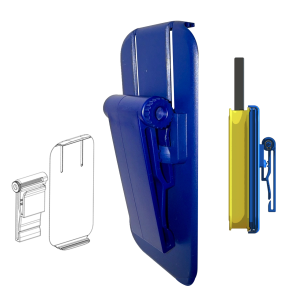
Weatherdock Rescue Pro Mounting Plate
$75.93Original price was: $75.93.$71.93Current price is: $71.93.