
Expert Advice on PFDs, MOB Systems & Emergency Readiness
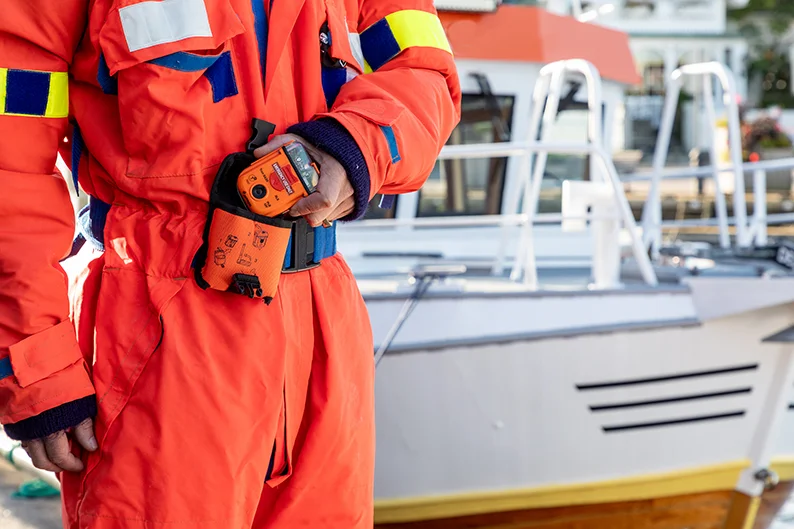
Venturing out onto open water carries inherent risks — changing weather, mechanical failures, or unexpected emergencies can turn a pleasant voyage into a life-threatening situation. That’s why marine safety must be at the heart of every boater’s preparation. In this guide, we cover one of the pillars of marine safety: personal flotation devices (PFDs / life jackets), Man-Overboard (MOB) systems, and overall emergency readiness (planning, communications, training). Whether you’re a weekend sailor or seasoned mariner, this expert advice will help you stay safer on the sea. Not all life jackets are the same. Different designs suit different conditions: Type I (Offshore Life Jacket): Highest buoyancy, designed to turn most unconscious wearers face-up. Ideal for offshore or rough conditions. Type II (Near-Shore Buoyant Vest): For calmer waters, where quick rescue is likely. Type III (Flotation Aid): Comfortable for regular use; good for watersports, fishing, etc. Type IV (Throwable Devices): Ring buoys or cushions you throw to someone in the water (not meant to be worn). Type V (Special Purpose): Hybrid, inflatables, or devices with conditions specified (e.g. deck suits). In U.S. recreational boating regulations, for boats 16 ft or longer, one PFD of Type I, II, III, or V is required per person, plus one Type IV throwable device.Chubb Choose a PFD that matches your boating environment, conditions, and rescue timeline. 1.2 Fit, maintenance & inspection A PFD is only effective if it fits properly: Fit: Must snugly fit your torso. Lift your arms, stretch, and your jacket should stay in place without riding up. Visibility & design: Bright colors, reflective tape, and features like elevated lights or integrated strobes increase your chance of being seen. Maintenance: Inspect for tears, seam strength, cracked hardware, functioning inflation if applicable. Service intervals: Check manufacturer instructions. Some inflatable PFDs require periodic servicing. 1.3 Usage best practices Always wear a PFD when underway, not just keep it onboard. Use automatic inflation versions in rough offshore waters, but learn how to manually inflate and how to override them. Secure crotch or leg straps if the jacket has them (to prevent “blow-over”). Train with donning your PFD in rough conditions, so you know how it feels to wear and swim in it. Wearing a life jacket can dramatically increase survival chances; many drowning incidents occur when people fall overboard without one.Chubb When someone goes over the side — that’s a Man Overboard (MOB) situation, and seconds matter. Modern systems reduce response time and confusion. 2.1 Why MOB systems are essential A victim in the water can drift away quickly due to wind, current, or vessel motion. Traditional sighting is difficult, especially in rough seas or low visibility. MOB systems enhance detection, tracking, and recovery. 2.2 Types of MOB systemsa) AIS-MOB / DSC Beacon devices These are personal beacons that transmit a distress signal with GPS position via AIS or DSC (Digital Selective Calling).They often include: Activation (manual or water-activated) Strobe or LED lights to aid visual location Integration with vessel AIS / navigation system Many modern systems are compact and wearable, often as a small unit clipped to life jackets. b) Radar & Infrared tracking Some vessels use radar or IR (infrared) thermal sensors or cameras to detect a person in the water and integrate with MOB alarm systems. These systems may highlight targets in low light or moderate sea states. c) Search patterns and recovery techniques Even with technology, trained crew using standard search patterns (e.g. Williamson, expanding square, sector search) must coordinate with the MOB system to physically retrieve the person safely. 2.3 Best practices and redundancy Always carry a backup device (e.g., handheld beacon) in case the main one fails or becomes submerged. Register your device (e.g. 406 MHz EPIRB or PLB) with the appropriate authority so rescuers can correlate signals to your vessel. Ensure your vessel AIS / navigation system is configured to alert when a MOB beacon is detected. Drill MOB retrievals frequently, practicing approaches, turning, and recovery in real conditions. In U.S. regulations, vessels operating offshore should carry additional safety gear including an EPIRB, life raft, and accurate means of position determination.uscgboating.org Preparation and training are as vital as having equipment. Below are the core elements of full readiness. 3.1 Planning & communicationa) Float plan / trip notification Always share your intended route, departure and return times, number of people, and vessel details with someone ashore. If you don’t return on time, authorities know where to start. b) Weather & forecast awareness Always check marine forecasts and be ready for changes. Avoid heading out if storms or squalls are expected. The weather can shift rapidly at sea.National Weather Service+1 c) Redundant communication systems Have at least two means of communication: VHF (with DSC) or marine radio (not just cell phones) Satellite phone or EPIRB / PLB for beyond VHF range Always carry spare batteries, handheld units, and backup antennas. Standard marine communication phrases (SMCP) are recommended to avoid miscommunication at sea.Wikipedia 3.2 Crew training & drills Regular emergency drills: MOB drills, fire drills, abandon-ship drills. Familiarize crew with each piece of safety gear and how to use it (flares, fire extinguishers, bilge pumps, etc.). Understand damage control basics: patching leaks, controlling flooding, managing fires. 3.3 Emergency kits & redundancy Essential items every vessel should carry: First aid kit (supplies and manual) Flares / signaling devices (hand flares, parachute, smoke) Fire extinguishers (rated and maintained) Tool kit / repair supplies (patch kits, spare parts) Extra fuel, water, rations, survival suits (in cold waters) Portable battery / power bank, flashlights, reflectors Redundancy is key: duplicate essential items and backup supplies. 3.4 Hypothermia & immersion protection In cold water, hypothermia can incapacitate rapidly. To mitigate: Use immersion or survival suits in frigid waters Stay as still as possible in the water to preserve body heat Use flotation + insulation: life jacket plus throw cushion or rescue sling 3.5 Post-emergency mindset & coordination Use calm, structured decision-making rather than panic. If possible, keep visual contact with the person in the water and maintain drift